
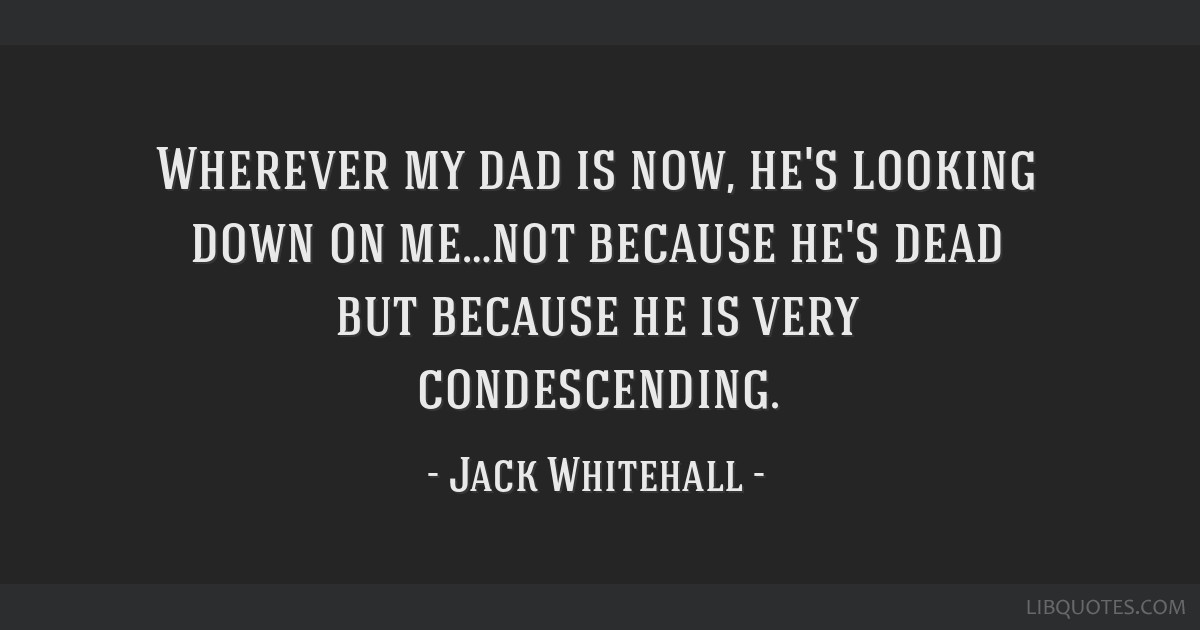
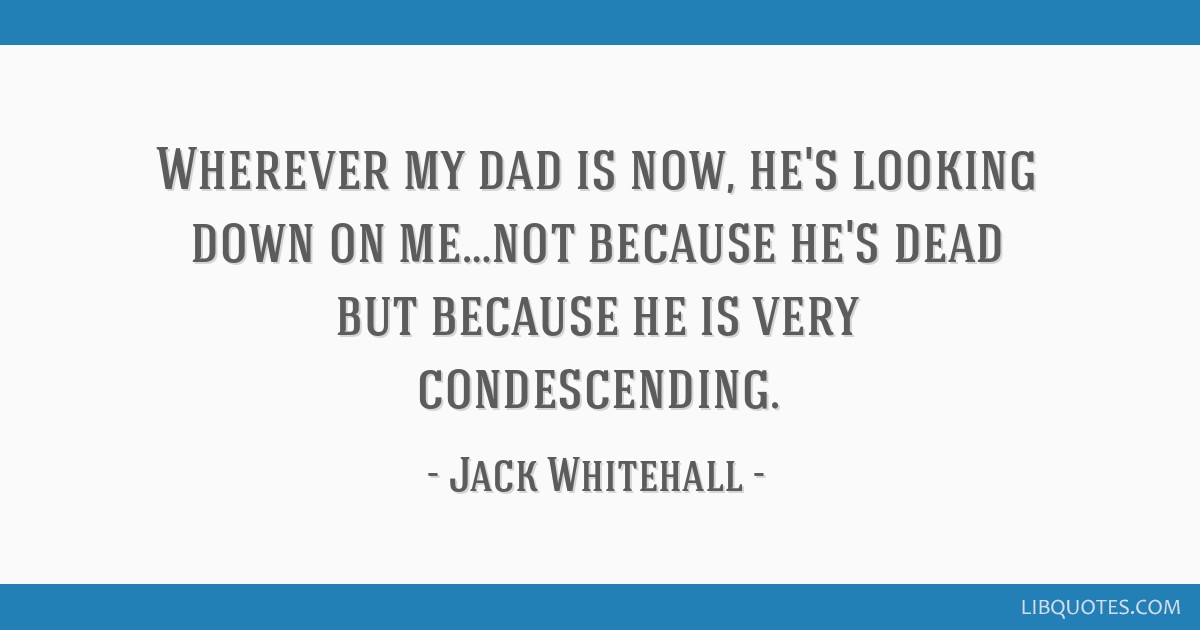
Jack Whitehall’s dry, self-deprecating humor often dances on the edge of absurdity—but beneath the punchline lies a sharp observation about how we live, work, and relate to one another. When he quips, “I’m sure wherever my dad is, he’s looking down on us. He’s not dead—just very,” it’s more than a throwaway joke. It’s a satirical reflection on performance, perception, and the masks we wear in professional and personal spheres.
This single line distills decades of British social commentary into a 15-second zinger. It mocks our tendency to mythologize authority, dramatize presence, and equate physical distance with emotional or moral oversight. But more importantly, it opens a door to deeper conversations about honesty, workplace dynamics, and the contradictions of human nature.
Let’s dissect why this quote resonates—and what it quietly teaches us.
The Comedy of Distance: How Humor Reveals Truth
Whitehall’s humor relies heavily on the gap between expectation and reality. In this case, the cliché “he’s looking down on us” is usually reserved for the deceased—evoking sentimentality, reverence, even guilt. By subverting it with “he’s not dead—just very,” Whitehall exposes how often we use emotional language not to convey truth, but to manage impressions.
This technique—using comedy to spotlight hypocrisy—is rooted in classical satire. Think of Jonathan Swift or Oscar Wilde. Whitehall brings that tradition into the modern era, applying it to family dynamics, class behavior, and corporate culture.
Why This Line Works in Real Life
- In families: We often speak of parents as ever-watching moral arbiters, even when they’re emotionally absent.
- In offices: Leaders are treated as omniscient, despite visible disengagement.
- In social media: We perform for unseen audiences, imagining judgment from people who aren’t even paying attention.
Whitehall’s joke reminds us: just because someone is physically present doesn’t mean they’re emotionally or ethically engaged. And vice versa.
Honesty in the Age of Performance
One of the quietest revolutions in modern culture is the growing demand for authenticity. Employees want leaders who admit mistakes. Audiences favor comedians who reveal vulnerability. Customers support brands that own their flaws.
Whitehall’s quote, stripped of its humor, exposes a universal lie: we pretend people are present when they’re not—and pretend they’re not judging when they are.
The Cost of False Presence In both personal and professional settings, pretending to be “here” while being “very” elsewhere has real consequences: - Workplace disengagement: A manager physically in the office but mentally checked out creates confusion, not leadership. - Family estrangement: Parents who are present but emotionally detached breed resentment, not connection. - Social media illusion: We curate lives that look engaged while feeling isolated.
Whitehall’s joke becomes a mirror: Are we really showing up? Or are we just very somewhere else?
Practicing Radical Honesty Instead of pretending, consider
these adjustments:
- In meetings: If distracted, say so. “I’m juggling a few things—bear with me.”
- With family: Replace performative interest (“How was school?”) with real curiosity (“What’s one thing that pissed you off today?”).
- In public speaking or content: Admit uncertainty. “I don’t have the answer, but here’s how I’m thinking about it.”
Honesty isn’t about oversharing—it’s about ending the silent contract that says we must always appear competent, attentive, and in control.
Work Culture and the Myth of the “Always-On” Leader
Whitehall’s dynamic with his father—chronicled in Travels with My Father—is a masterclass in contrasting styles. Michael Whitehall, the old-school agent, represents a generation of leaders who lead through presence, authority, and emotional restraint. Jack, the Gen-X millennial hybrid, leads through self-awareness, vulnerability, and humor.
The quote—“he’s looking down on us… just very”—captures the absurdity of leadership by proximity. Just because someone is in the room doesn’t mean they’re contributing. In fact, their silent, looming presence can stifle creativity.
The “Dad in the Room” Effect in Offices
Many workplaces suffer from what we might call the Dad-in-the-Room Syndrome: - A senior leader sits silently in meetings, arms crossed, saying nothing. - Team members second-guess every word, afraid of judgment. - No feedback is given—just passive observation. - Innovation slows; morale dips.
This isn’t leadership. It’s surveillance.
What Modern Workplaces Need Instead
| Old Model (The “Very” Leader) | New Model (The Engaged Leader) |
|---|---|
| Observes without participating | Participates with purpose |
| Values hierarchy over input | Values collaboration |
| Communicates through silence | Communicates with clarity |
| Expects deference | Earns trust |
Jack Whitehall’s comedy highlights this shift. His father’s generation led through gravitas. Today’s teams respond to empathy, transparency, and occasional self-mockery.
Human Nature: Why We Pretend to Be Watching
The deeper irony in Whitehall’s quote isn’t just about his dad—it’s about us. We all play the “looking down” role at times.
- Parents watch their kids from the kitchen doorway, pretending not to care.
- Managers “pop by” desks to “see how things are going.”
- Friends say “I’m here for you” while glancing at their phones.
We’ve normalized performative presence—being seen as involved without actually engaging.
The Psychology Behind the Facade Humans are hardwired to seek approval and avoid conflict. Being “very” is safer than being fully present: - You can’t be wrong if you don’t commit. - You can’t be ignored if you’re technically there. - You can’t be vulnerable if you stay distant.
But this safety comes at a cost: shallow relationships, stagnant teams, and lives lived in the margins of experience.
Breaking the Cycle Try replacing “very”
with “fully”:
- Instead of hovering, sit down and ask, “What do you need?”
- In team settings, replace observation with participation: “I don’t know—what do you think?”
- In personal relationships, trade silent judgment for open curiosity.
It’s uncomfortable at first. But it’s where real connection begins.
Comedy as a Lens for Cultural Truth
Jack Whitehall isn’t just a comedian—he’s a cultural diagnostician. His jokes about class, privilege, and family expose the unspoken rules we live by.
This particular quote works because it’s relatable, subversive, and layered: - Relatable: Everyone knows someone who’s “very” present. - Subversive: It mocks the sanctity of parental and professional authority. - Layered: It’s funny on the surface, unsettling underneath.
Other comedians do this too—Hannah Gadsby on trauma, Ricky Gervais on hypocrisy, John Mulaney on anxiety. But Whitehall’s angle is uniquely British: polite on the surface, deeply irreverent beneath.
When Comedy Sparks Change Humor disarms. It lets us confront truths we’d otherwise avoid. Consider how this quote could be used: - In leadership training: “Are you leading—or just ‘very’ present?” - In therapy: “Do you feel seen by the people in your life?” - In team-building: “How can we move from observation to engagement?”
Comedy doesn’t solve problems. But it can name them—loudly, clearly, and with a punchline that sticks.
The Takeaway: Show Up—Or Don’t Pretend To Jack Whitehall’s quote isn’t really about his dad. It’s about all of us.
It’s a challenge to stop performing presence and start practicing it.
Whether you’re a CEO, a parent, a friend, or a content creator—ask yourself: Am I actually here? Or am I just very somewhere else?
Because people don’t need you to loom. They need you to listen. They don’t need you to judge from above. They need you to join them below.
Honesty starts with that admission. Work culture improves when leaders stop “looking down” and start showing up. And human nature—flawed, funny, fragile—gets a little kinder each time we choose real over performative.
So the next time you’re in a room, resist the urge to be “very.” Be fully. Be flawed. Be here.
That’s the real life lesson hiding in the joke.
Frequently Asked Questions
What is the full quote by Jack Whitehall about his dad? The quote is: “I’m sure wherever my dad is, he’s looking down on us. He’s not dead—just very.” It’s a comedic twist on the cliché of departed loved ones “watching over” us.
What does “he’s not dead—just very” mean? It means someone is technically present but emotionally or mentally distant—physically here, but very elsewhere. It’s a satirical take on disengagement.
How does Jack Whitehall use humor to comment on family dynamics? Through shows like Travels with My Father, Whitehall uses awkward, honest interactions with his reserved father to explore generational differences, emotional repression, and the comedy of miscommunication.
What can workplaces learn from this quote? Leaders should focus on genuine engagement, not just physical presence. Silent observation doesn’t inspire teams—active listening, feedback, and vulnerability do.
Is Jack Whitehall’s comedy based on real life? Yes. Much of his material draws from his upbringing, relationship with his father, and experiences in the entertainment industry—blending personal truth with exaggeration for comedic effect.
How does this quote relate to honesty? It highlights how we use language to mask reality—pretending people are engaged when they’re not, or pretending we’re okay with absence when we’re not.
Can humor improve workplace culture? Yes, when used authentically. Self-deprecating humor, like Whitehall’s, can break down hierarchies, reduce tension, and encourage openness—but only if it doesn’t replace real communication.
FAQ
What should you look for in Jack Whitehall’s Quote of the Day on Life, Work, and Honesty? Focus on relevance, practical value, and how well the solution matches real user intent.
Is Jack Whitehall’s Quote of the Day on Life, Work, and Honesty suitable for beginners? That depends on the workflow, but a clear step-by-step approach usually makes it easier to start.
How do you compare options around Jack Whitehall’s Quote of the Day on Life, Work, and Honesty? Compare features, trust signals, limitations, pricing, and ease of implementation.
What mistakes should you avoid? Avoid generic choices, weak validation, and decisions based only on marketing claims.
What is the next best step? Shortlist the most relevant options, validate them quickly, and refine from real-world results.