Photographs don’t just capture moments—they preserve diplomacy, style, and shifting global relationships. As King Charles III embarks on a state visit to the United States, the public eye turns not only to the present but to decades of royal precedent. Images of British monarchs on American soil tell a story of alliance, admiration, and the occasional cultural quirk. These visual records, from black-and-white snapshots to high-definition broadcasts, trace the evolution of Anglo-American relations through the lens of royal engagement.
Each visit has carried symbolic weight—whether strengthening wartime alliances, celebrating shared heritage, or navigating moments of political tension. The photographs that emerge aren’t merely ceremonial; they’re artifacts of soft power in action.
The First Royal Footprint: King George VI and the 1939 Visit
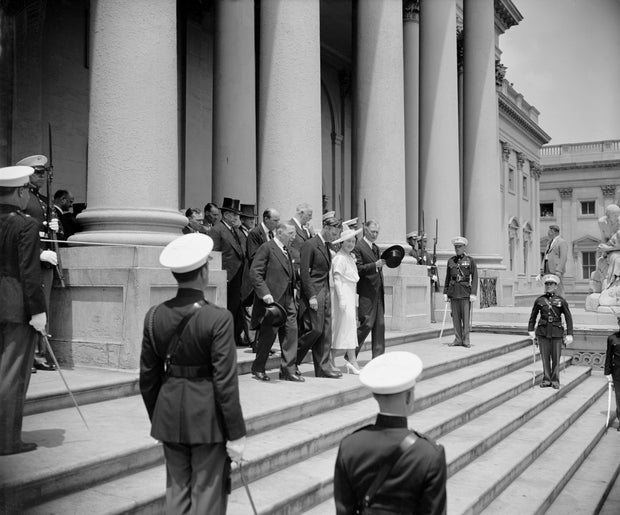
Before Queen Elizabeth or Prince Philip, it was King George VI who first stepped onto U.S. soil as a reigning British monarch. His 1939 tour—alongside Queen Elizabeth (later the Queen Mother)—was a diplomatic masterstroke, occurring on the brink of World War II. The visit aimed to solidify American support for Britain amid rising European tensions.
Photographs from that summer remain iconic: the royal couple laughing at a barbecue at President Franklin D. Roosevelt’s Hyde Park estate, touring the World’s Fair in New York, and even sampling hot dogs—an act that baffled some British observers but charmed the American public.
This visit broke protocol and tradition. For the first time, a reigning British monarch had crossed the Atlantic while still on the throne. The images of George VI in casual settings—wearing a hat at a baseball game or waving from open cars—helped humanize the monarchy in American eyes.
Why it mattered: The visual narrative softened the British crown’s imperial image, recasting it as approachable and aligned with American values. It laid the foundation for royal visits that prioritized public connection over pageantry alone.
Elizabeth II: The Queen Who Shaped Royal Diplomacy in America
No monarch has visited the U.S. more than Queen Elizabeth II. Over seven decades, she made 26 trips—some state visits, others private or ceremonial. Her first official U.S. visit as queen came in 1957, a moment captured in grainy newsreels showing her arrival at Washington National Airport.
But it was her 1976 bicentennial trip—timed to America’s 200th birthday—that produced some of the most enduring images.
She sailed up the Potomac on the royal barge, toured Boston, and hosted a state dinner at the British Embassy. Photographs from that visit show her in red coats and matching hats, standing beside President Gerald Ford, smiling through fireworks over the Capitol.
One notable moment: her visit to the Old South Meeting House in Boston, the birthplace of the American Revolution. Standing where colonists once plotted rebellion against the Crown, the Queen acknowledged history without apology—a delicate diplomatic balancing act, perfectly framed by the camera.
Later Encounters: From Reagan to Obama
As decades passed, the Queen adapted her presence to changing times. Her 1981 visit with President Ronald Reagan emphasized Cold War unity. Images of them laughing at a California ranch, or reviewing troops at Mount Vernon, reinforced a “special relationship” narrative.
In 2007, during George W. Bush’s administration, she returned for the Jamestown 400th anniversary. Photographs show her in a bright yellow coat, touring a reconstructed colonial village. The contrast between her regal presence and the rough-hewn settler cabins was striking—and widely shared.
:max_bytes(150000):strip_icc():focal(728x275:730x277)/princess-catherine-prince-william-donald-trump-king-charles-iii-trump-state-visit-uk-windsor-091725-8672599a27214b6f8ffdbb07fd7596e4.jpg)
Her 2011 visit with President Barack Obama marked a more modern tone. Captured in sharper digital clarity, the images reflect a monarchy engaging with a diverse, globalized America. She visited the Smithsonian, laid a wreath at the 9/11 Memorial, and shared quiet moments with the Obamas in the White House Rose Garden.
Each photograph became a statement: continuity, respect, and quiet resilience.
Prince Philip and the Power of the Supporting Role
While the spotlight often fell on the Queen, Prince Philip’s presence in U.S. visits added depth and contrast. Known for his dry wit and occasional gaffes, Philip’s photos often captured unguarded moments.
In 1984, during a visit to Yellowstone, he was photographed peering into a bear cage, prompting headlines. In 1995, he toured NASA’s Johnson Space Center, engaging with astronauts. These images positioned him not just as a consort, but as an advocate for science and exploration.
Though never the focus, Philip’s American visits contributed to the royal brand—one of duty, curiosity, and adaptability. His photos often revealed a man trying, sometimes awkwardly, to connect.
Prince Charles Before the Crown: A Decades-Long U.S. Presence
Long before becoming king, Charles made his mark across the U.S. His first visit came in 1970, at age 21, where he toured NASA and met President Nixon. Over the years, he became one of the most photographed royals on American soil—often for reasons beyond diplomacy.
In the 1980s and 1990s, his appearances coincided with growing media obsession with the royal family. Photographs of him with Diana at state dinners, or later with Camilla, were scrutinized for emotional cues. A 1999 trip included a speech at the UN and a tour of Harlem, where he was photographed speaking with community leaders—efforts to position him as a socially conscious heir.
But not all images were flattering. Paparazzi shots of him looking weary or out of place fed narratives of a man ill-suited to modern monarchy. Yet these very photos underscored his struggle to redefine the role—something his current state visit may finally validate.
Charles III’s State Visit: A New Chapter in Royal Imagery With his first U.S. state visit as king, Charles III steps into a legacy already rich with photographic moments. But this trip is different—not just in title, but in context.
The world watches a 75-year-old monarch navigating climate advocacy, post-monarchy skepticism, and a fractured media landscape. The photographs from this visit will be analyzed for tone, symbolism, and authenticity.
Expect images of him in tailored navy suits, perhaps visiting innovation hubs or environmental projects. Look for moments with President Biden—perhaps at a climate roundtable or a cultural event. The White House state dinner will yield polished portraits: crystal, candles, and carefully chosen table partners.
But the lasting images may come from less scripted scenes. A handshake with a young activist. A moment of silence at a memorial. A laugh shared during a private toast. These are the frames that shape public perception.
Unlike his mother’s visits, which emphasized stability, Charles’s trip may aim to project action—specifically, action on climate, sustainability, and intergenerational responsibility. The visual narrative will likely reflect that mission.
How Royal Photos Shape Public Perception
Photographs from royal visits do more than document—they influence.
A single image can redefine a monarch’s public persona. Elizabeth’s hot dog moment in 1939 made her seem relatable. Charles’s 1981 wedding photo with Diana became a global symbol of romance. Prince Harry in military uniform in Afghanistan projected duty; out of uniform in Las Vegas, it projected rebellion.
In the digital age, the stakes are higher. Images spread faster, are cropped, memed, and politicized. A frown, a gesture, a misstep in fashion—all become content.

For Charles III, the goal is consistency: to appear both royal and relevant, authoritative yet approachable. The photo ops are meticulously planned, but the public responds to authenticity.
What Makes a Royal Photo Iconic?
Not every image endures. The ones that do share common traits:
- Human connection: A touch, a smile, eye contact.
- Historical contrast: Monarch in front of a revolutionary site, or modern tech hub.
- Cultural resonance: Participation in American traditions (e.g., hot dogs, baseball).
- Unexpected moments: Rain during a parade, a child approaching the royals.
The most powerful royal photos don’t just show where they were—they suggest why it mattered.
The Diplomatic Weight Behind the Lens
Royal visits are not vacations. They’re strategic instruments of soft power.
While treaties are signed by politicians, public sentiment is shaped by symbolism. A monarch’s presence signals respect, continuity, and shared values. In times of crisis—9/11, post-Brexit uncertainty, global pandemics—these visits offer reassurance.
The U.S. and U.K. may have different governments, but the royal family remains a constant in the bilateral relationship. And photographs are the primary medium through which that relationship is communicated to the public.
When Queen Elizabeth stood beside George W. Bush at Ground Zero in 2001, the image wasn’t just emotional—it was geopolitical. It said: We stand with you.
Similarly, Charles III’s visit will be read as a reaffirmation of alliance, especially as both nations face climate crises and shifting global power dynamics.
Closing: What to Watch For in the Coming Frames
As King Charles III walks the halls of the White House, tours American cities, and shares meals with leaders, cameras will be everywhere. The resulting images will join a century-long visual archive of royal engagement.
But beyond the pomp, watch for the subtle cues: - How he engages with younger generations. - Whether climate action is visibly integrated into the itinerary. - His body language in unguarded moments. - The diversity of people he meets—beyond politicians and dignitaries.
The best royal photos don’t just show a visit—they show a connection. And in an age of skepticism, connection may be the most valuable currency of all.
FAQ
Did any British monarch visit the U.S. before George VI? No. Although Edward VIII visited as Prince of Wales in the 1920s, George VI was the first reigning British monarch to travel to the U.S. in 1939.
How many times did Queen Elizabeth II visit the United States? Queen Elizabeth II made 26 trips to the U.S. during her 70-year reign, including state visits, private trips, and official engagements.
What was the significance of the Queen’s 1976 bicentennial visit? Her 1976 trip celebrated America’s 200th birthday and symbolized reconciliation and enduring alliance between the U.S. and U.K., despite the Revolutionary War.
Did Prince Charles visit the U.S. with Diana? Yes. Prince Charles and Princess Diana visited the U.S. together multiple times, including a 1985 trip that featured a White House dinner hosted by President Reagan.
Are royal state visits taxpayer-funded? In the U.K., the sovereign’s official duties—including state visits—are supported by the Sovereign Grant, funded by taxpayers. However, host nations typically cover in-country logistics.
What role does the media play in royal visits? Media coverage amplifies the diplomatic impact of royal visits. Photographs and broadcasts shape public perception and reinforce the “special relationship” between the U.K. and U.S.
How are royal visit itineraries planned? Royal visit schedules are coordinated between the British Foreign Office, the U.S. State Department, and the Royal Household, balancing diplomacy, public engagement, and security.
FAQ
What should you look for in Royal Moments: British Monarchs in America Through the Years? Focus on relevance, practical value, and how well the solution matches real user intent.
Is Royal Moments: British Monarchs in America Through the Years suitable for beginners? That depends on the workflow, but a clear step-by-step approach usually makes it easier to start.
How do you compare options around Royal Moments: British Monarchs in America Through the Years? Compare features, trust signals, limitations, pricing, and ease of implementation.
What mistakes should you avoid? Avoid generic choices, weak validation, and decisions based only on marketing claims.
What is the next best step? Shortlist the most relevant options, validate them quickly, and refine from real-world results.