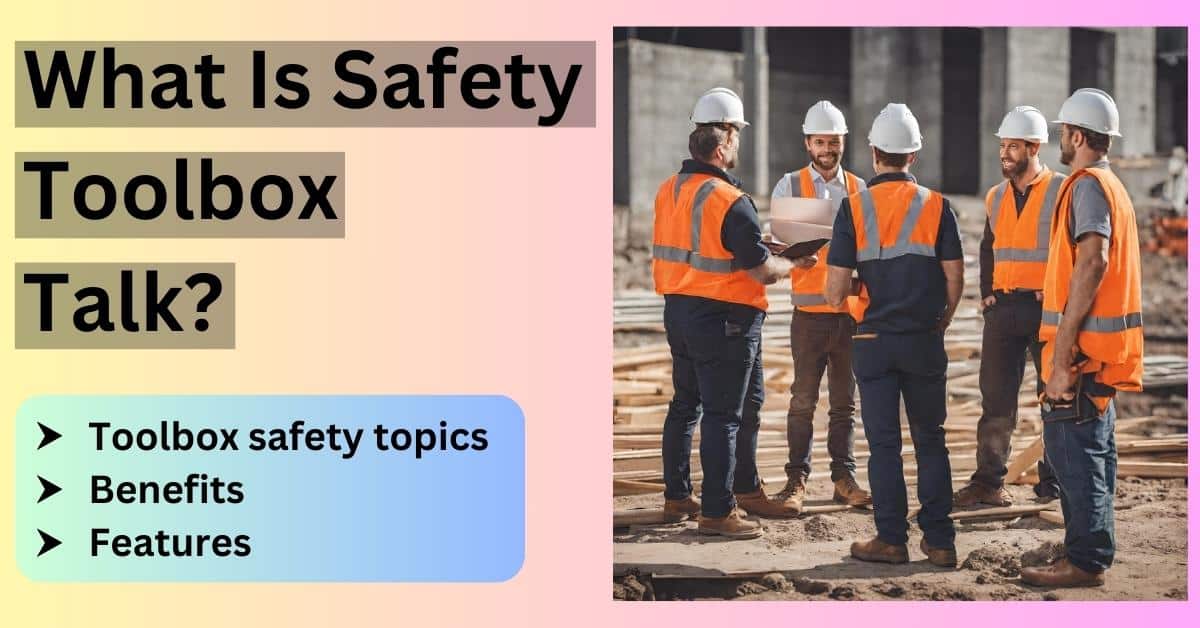
Safety doesn’t start with policy manuals or compliance audits—it starts with conversation. That’s where toolbox talks come in. These short, focused safety meetings are critical for reinforcing protocols, addressing hazards, and keeping teams alert. But without structure, even the best intentions fall flat. That’s why a free toolbox talk template in Word format is more than a convenience—it’s a frontline defense.
Microsoft Word dominates workplace documentation for a reason: it’s accessible, editable, and universally supported. A well-designed Word template lets safety managers, supervisors, and foremen deliver consistent messaging without reinventing the wheel every time. More importantly, it ensures critical elements—attendance, topic, discussion points, signatures—are never missed.
Below, we break down what makes a toolbox talk template effective, where to find high-quality free versions, and how to use them to drive real behavioral change.
Why Use a Free Toolbox Talk Template in Word?
Toolbox talks are only as strong as the process behind them. A free template removes the friction of starting from scratch. But not all templates are equal. The best ones do three things:
- Standardize structure – Every session follows the same flow: topic, hazard review, controls, employee input, and sign-off.
- Support compliance – Documents prove training occurred, which OSHA and other regulators may request.
- Encourage participation – Built-in sections prompt discussion, not just lectures.
Word templates win here because they’re easy to customize. Unlike PDFs or rigid online forms, a .docx file can be adapted for roofing, electrical work, warehouse operations, or excavation—without coding or special software.
Common mistake: Using a generic template that doesn’t match your job site risks. A talk about fall protection won’t help a crew handling chemicals unless it’s tailored.
What to Look for in a Quality Word Template
A free download is only valuable if it’s practical. Before grabbing the first Google result, check for these features:
#### Must-Have Fields - Date and location – Critical for record-keeping and incident tracing - Topic and sub-topic – Specific enough to be useful (e.g., "Ladder Safety – Extension Ladders") - Hazard identification – Space to list real risks present that day - Control measures – How to mitigate those hazards - Attendee list with signatures – Proof of participation - Facilitator name and role – Accountability matters
#### Bonus Features - QR code field – Link to related safety data sheets or training videos - Incident recap section – Reinforce learning from near-misses - Multilingual support – For diverse crews (even if just a note to translate verbally)

Templates that are just a blank document with a title line fail the usability test. The best ones guide the user through the conversation, not just the paperwork.
Top 5 Sources for Free Toolbox Talk Templates (Word Format)
Not all free templates are created equal. Some are outdated, poorly formatted, or missing key compliance elements. These five sources deliver ready-to-use, professional-grade Word files:
| Source | Key Features | Best For |
|---|---|---|
| OSHA.gov | Official, compliance-aligned, simple design | Regulated industries like construction |
| SafetyCulture (iAuditor) | 50+ customizable templates, export to Word | Teams wanting depth and variety |
| ClickSafety Free Resources | Industry-specific (electrical, confined space) | High-risk specialty work |
| WorkSafeBC | Clear layout, bilingual options, hazard focus | Canadian operations or multilingual crews |
| Template.net (Free Section) | Clean formatting, easy edits | Quick deployment with minimal tweaking |
Pro tip: Always check the license. Some “free” downloads require attribution or restrict commercial use. For internal safety meetings, stick with openly licensed or public domain templates.
Download one from OSHA to meet baseline standards, then use SafetyCulture’s library to diversify topics. Between them, you’ll cover 90% of common job site hazards.
How to Customize Your Word Template for Maximum Impact
A template is a starting point—not a final product. Here’s how to make it work for your team:
#### Step 1: Brand It Add your company logo, safety slogan, and contact info at the top. This reinforces ownership and professionalism.
#### Step 2: Simplify the Language Avoid jargon. Instead of “utilize fall arrest systems,” say “wear your harness and connect to the anchor.” Clarity prevents misunderstanding.
#### Step 3: Add Site-Specific Risks Create a dropdown or checklist of recurring hazards (e.g., “overhead power lines,” “wet decking”). This speeds up prep and ensures relevance.
#### Step 4: Build a Rotation Schedule Use the template as part of a 52-week plan. Assign topics monthly: - January: Cold stress - April: Spring equipment checks - August: Heat exhaustion - November: Holiday rush safety
Real-world example: A roofing crew in Texas used a modified Word template to focus on heat illness every summer Friday. They added a section for hydration check-ins. Injury rates dropped 40% over two seasons.
Common Pitfalls (and How to Avoid Them)
Even with a perfect template, execution can fail. Watch for these red flags:

- Rushing the talk – 5 minutes isn’t enough for real discussion. Allocate 10–15 minutes and stick to it.
- One person talking – If the supervisor does all the talking, engagement dies. Use the template to prompt questions: “Has anyone seen this hazard before?”
- Filing and forgetting – Templates lose value if records aren’t stored. Create a shared drive folder labeled “Toolbox Talks – [Project Name].”
- Using last year’s version – Update templates annually. Remove outdated PPE standards or defunct emergency numbers.
A Word file makes updates easy. Enable “Track Changes” when revising, so edits are visible and approved.
Making the
Most of Digital Workflows
While Word is universal, consider how it fits into broader systems:
- Print and sign – Still common on sites without reliable Wi-Fi. Use carbon-copy forms if digital backups are needed.
- Hybrid approach – Fill out the Word template digitally after the talk, based on notes. Attach photos of the signed paper version.
- Integration – Some teams paste the completed talk into a safety management platform like EHS Insight or Procore.
Limitation: Word doesn’t auto-remind you to run a talk. Pair it with a calendar alert or project management tool to stay consistent.
Sample Toolbox Talk: Fall Protection (Word Template Snippet)
Here’s how a filled-out section might look using a free Word template:
Topic: Fall Protection – Roof Edges Date: April 5, 2024 Location: 123 Main St, 3rd Floor Roof Deck Facilitator: J. Rivera, Safety Supervisor
Hazards Identified: - Unmarked edge zones - Missing guardrails on north side - Tools left near edge
Controls in Place: - Harnesses required within 6 feet of edge - Red zone tape installed - Tool lanyards mandatory
Discussion Points: - “What would you do if a coworker wasn’t tied off?” - “Show me where the anchor points are.”
- Attendees:
- M. Torres – Signature
- R. Kim – Signature
- D. Patel – Signature
This level of detail turns a routine check-the-box exercise into a real safety intervention.
Final Tips for Sustainable Use
A free toolbox talk template in Word is only useful if it’s used—consistently and correctly. To lock in results:
- Train supervisors on how to lead, not read, the talk.
- Review past talks monthly – Look for recurring hazards or attendance gaps.
- Rotate topics aggressively – Don’t fall into the “same 5 talks” trap.
- Archive completed templates for at least one year (longer for federal contracts).
The goal isn’t just documentation. It’s habitual safety awareness. A good Word template supports that by making preparation fast, thorough, and repeatable.
Ready to Implement?
Download a free toolbox talk template in Word from OSHA or SafetyCulture today. Customize it with your logo, add your most common hazards, and schedule your first session. Print five copies, gather the crew, and start talking—not just about safety, but with purpose. The right template doesn’t just save time. It can save lives.
FAQ
What should you look for in Free Toolbox Talk Template Word Downloads for Safety Teams? Focus on relevance, practical value, and how well the solution matches real user intent.
Is Free Toolbox Talk Template Word Downloads for Safety Teams suitable for beginners? That depends on the workflow, but a clear step-by-step approach usually makes it easier to start.
How do you compare options around Free Toolbox Talk Template Word Downloads for Safety Teams? Compare features, trust signals, limitations, pricing, and ease of implementation.
What mistakes should you avoid? Avoid generic choices, weak validation, and decisions based only on marketing claims.
What is the next best step? Shortlist the most relevant options, validate them quickly, and refine from real-world results.